


Preparing for pygmy goats starts long before they arrive home. I have put together a collection of information that I have learnt over the past few years of owning Pygmy Goats.This guide covers the essentials of caring for your goats, from feeding and shelter to health and husbandry, helping you create a safe and happy environment for them to thrive.
Welcoming pygmy goats into your family is an exciting experience, but it's important to be prepared.
Before bringing your goats home, make sure you have:

Before bringing your goats home, make sure you have suitable fencing

These adorable creatures, despite their small size, require a secure and comfortable space to thrive.

Goats are one of the least picky ruminants you can own, but a balanced diet is still essential for their health.

It's essential to know what to look for to ensure your new friend is healthy and happy. Here are some key points to check when you first bring your goat home:

Goats are one of the least picky ruminants you can own, but a balanced diet is still essential for their health.
At LaFamilia, my goats start each morning with either lucerne or oaten hay. They graze throughout the day before receiving a mix of chaff and goat pellets in the evening.
Fresh water should always be available, particularly during warmer weather. Make sure water troughs are safe for young kids, as deep troughs can become a drowning hazard.
Like all animals, there are also foods that should be avoided. Knowing what is safe to feed helps prevent unnecessary health issues.
My Goats Love... | |
| She Oak | Fresh branches for foraging. |
| Native Browse | Other suitable native browse sourced from local forestry areas. |
| Mineral Licks | Goat mineral lick blocks containing copper, salt, and minerals. |
| Apples & Carrots | Fresh treats (always cut into smaller pieces). |
| Pumpkin | A hearty, healthy favorite (always cut into smaller pieces). |
| Dates & Sultanas | Sweet, high-energy dried fruit treats. |
| Weet-Bix | A crunchy, popular grain-based treat. |
| Plain Crackers | Simple, plain baked snacks. |
Tip: Never throw feed directly onto the ground. Food can quickly become contaminated with dirt, manure and parasites.Foods to AvoidSome plants and foods are toxic to goats and should never be offered. If you're unsure whether something is safe for your goats, seek advice from your veterinarian or an experienced breeder before offering it. | |
| Household Foods | Avocado, chocolate, dairy products, and meat. |
| Other Animal Feeds | Dog food, cat food, and chicken grain. |
| Garden Vegetables | Kale, rhubarb leaves, and nightshade vegetables. |
| Toxic Plants & Trees | Holly, azaleas, milkweed, wild cherry, peach leaves, palm leaves, and crotalaria. |
This includes:
Regular observation allows problems to be identified early, helping your goats stay healthy and active. Melissa's manual also recommends checking eyelid colour for signs of worm burden and maintaining regular hoof trimming every 6–8 weeks.
Rather than worming automatically, I recommend checking whether your goats actually need treatment.
You can:
Healthy eyelids should be a bright pink colour. Pale pink or white can indicate a worm burden and may mean treatment is needed.
Always follow the instructions on the drench and seek veterinary or experienced breeder advice if you're unsure.
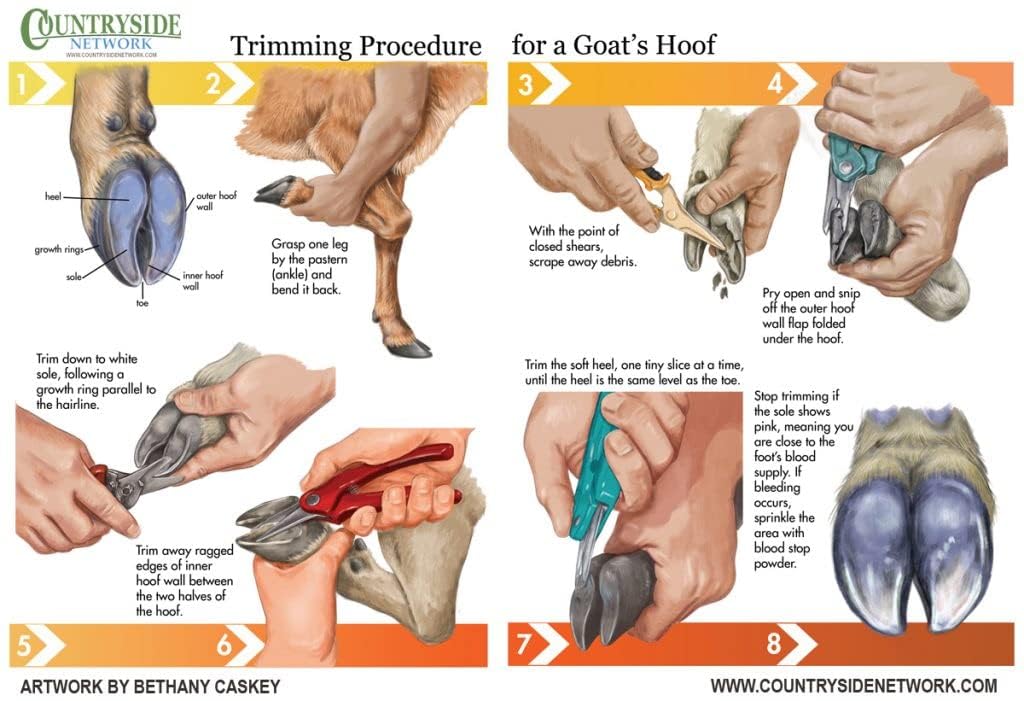
Goats hoofs need to be trimmed every 6 to 8 weeks. Having rocks or logs for your goats to climb on help with the time frame of trimmings.
I have a milking stand which I use to hold the goats still to have easy access to their feet.
Even the cleanest goats can get lice.
It isn't a reflection of poor husbandry or dirty conditions.
Most goats develop biting lice rather than blood-sucking lice, and they're usually very easy to treat.
I recommend Pestene powder, available from most rural suppliers.
Simply:
If you've purchased a wether from LaFamilia, he will have been banded at around eight weeks of age.
Over the following weeks, keep an eye on the banded area and apply antiseptic purple spray if needed.
Once the area has healed, the testicles will naturally fall away.
Although it can look alarming to first-time owners, this process is normal and does not hurt the goat.
Does are generally best bred between 18 months and 2 years of age, depending on their size and the buck being used.
Young does can begin cycling from as early as eight weeks old, so it's very important to keep bucks and bucklings in separate paddocks.
Buck aprons are also available and can be useful for keeping young bucks with their mothers for longer.
Having a basic first aid kit on hand means you're prepared for minor injuries or unexpected situations.
Upon purchaing a goat from Lafamilia, you will receive a list of all the important first aid kit items for both regular use and ‘just in case’ moments. This includes essentials such as wound spray, thermometers, electrolytes, vitamins, drenching equipment, and other commonly used supplies.
Do you love goats as much as we do?
Our kids become available throughout the year depending on our breeding schedule, and waiting lists may apply.
Whether you are looking to purchase, learn more, or register your interest for upcoming kids, we are always happy to help.